
CERAMIC PRINTED GLASS

CERAMIC PRINTED GLASS

What is Ceramic Printed Glass

Ceramic Printed glass also called Silk Screened glass has gained wide-spread for decoration and masking on building interior and exterior facades. Ceramic printing on glass is done with special enamels which are applied to glass before it is tempered. During the heating process in tempering or bending, this enamel fuses into the glass and becomes a monolithic construction. This is as permanent as any printed ceramic like crockery at your home and all technical characteristics are same as that of unprinted glass. It is life long and does not deteriorate with weather, detergents, normal acids or alkali. The methods of applying these enamels before tempering are roller coating, screen printing, spray printing & direct on glass digital printing.

Features & Benefits

ceramic printed glass image r9f228hus0zbv3l8nj6q9s4cpbsz26ok285lc0620o

Strong

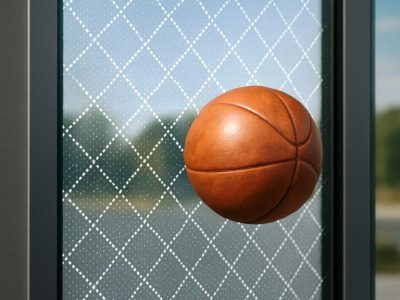
Ceramic printed glass is strong because it's tempered, making it significantly more resistant to impact and thermal stress. The ceramic print is permanently fused, adding to its surface durability.
permanent printing r9f2qjllis9a42a3pjge95ahr1zp4e6nqjin4m4j3s

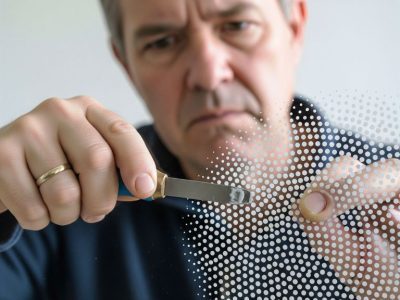
Permanent Printing

During the heating process in tempering or bending, color fuses into the glass and becomes permanent.
cermic patterns r9f2z8luqm5ri7nfxsr5tgazkd4xblp9xkrbxr8fjs

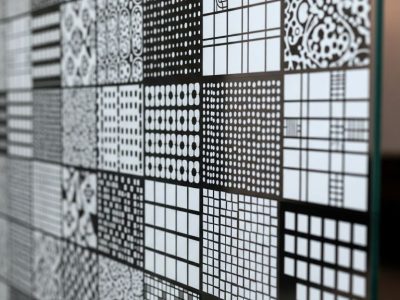
Variety

Variety of dots, squares, checks and patterns will give many design combinations.
printed glass r9f3905hqnj04dgsx0pmpzldqh07aegvxwqxf8r6wo

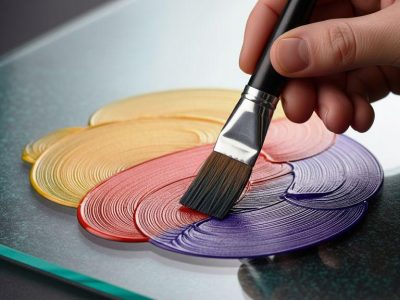
Ceramic Inks

Ceramic Inks provide unmatched printing, creating effects with exquisite detail and quality.
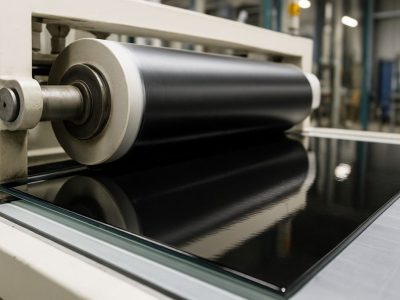
Methods of applying Ceramic Enamel

roller coating (2)

Roller Coating

It is the best for printing solid colors and for applying only one color.
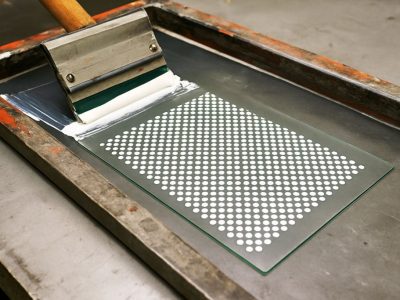
screen priting

Screen Printing with Ceramic Frit

It is suitable for solid colors and normal patterns like dots, squares, checks or lines in single color with repetitive designs.
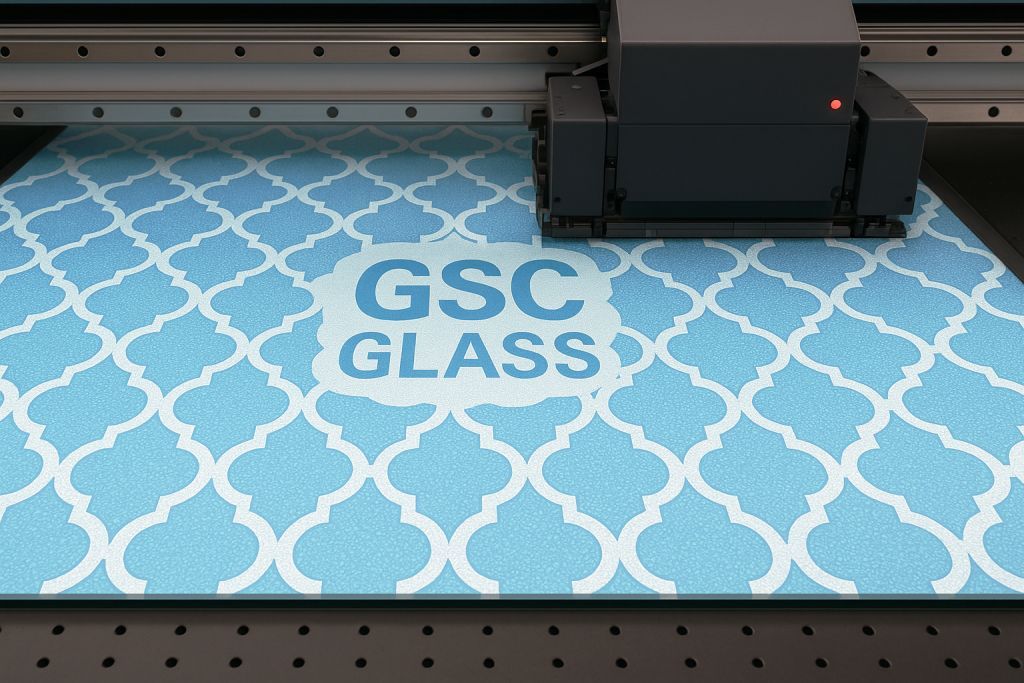
20250820 1222 sky blue glass printing simple compose 01k333wcm0fpya055xc6ev7gjs

Ceramic Digital Printing

It is better suited when the printing design varies or changes from glass and the final effect required is one large image achieved by tiling of various glasses to make one continuous image.

Size & Specification Options

  • Available in 3, 4, 5, 6, 8, 10, 12 mm thickness
  • Maximum Size:-  2400 x 4800 
  • Minimum Size:- 220 mm diagonal
  • Bent Glass:- Maximum Size 500 (height) X 1100 (width) mm, 800 mm minimum radius and thickness ranges between 5 mm to 12 mm
cermic patterns r9f2z8luqm5ri7nfxsr5tgazkd4xblp9xkrbxr8fjs

The GSC Advantage

  • Equipped with roller coating, digital printing, automated printing lines, and screen printing for maximum design flexibility.
  • First in Architectural glass in India with over 30 years of experience in glass processing.
  • Processing in Greater Noida
  • Flat as well as bend glass possible.
  • Best quality glass exported worldwide including Europe.
  • Most advanced tempering line capable of processing of most difficult Low-E glasses.
  • Best optics and least distortion.
  • Strongest possible glass.

Various Applications of Ceramic Printed Glass

Ceramic Printed Glass – Frequently Asked Questions (FAQs)

Yes, the ceramic ink is fused into the glass at high temperatures (600–700°C), making it highly scratch-resistant, UV-resistant, weatherproof, and long-lasting. It doesn’t peel, fade, or degrade over time.
It is used in building façades, partitions, skylights, spandrel panels, interior décor, home appliances (like oven doors and cooktops), shower enclosures, and signage, offering both decorative and functional value.
Absolutely. Ceramic printed glass allows for a wide range of designs — including dots, stripes, logos, and images — in various colors and opacities, tailored to meet project or branding requirements.
Yes. Ceramic printed glass is usually tempered or heat-strengthened, making it 4–5 times stronger than regular glass and safe for use in high-impact and high-temperature environments.
Yes, it can influence optical and thermal performance, especially depending on the print coverage and color. For example, dense patterns (like 50% coverage) or dark ceramic inks can reduce visible light transmission and slightly impact solar heat gain (SHGC). However, it does not compromise structural integrity or compatibility with IGU or laminated configurations — it's commonly used in spandrels and shading solutions for this reason.